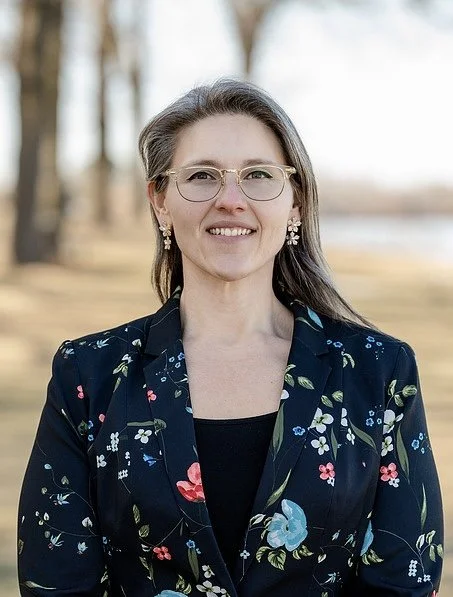
Service. Accountability. Results.

I’m running to represent Big Lake, Becker, Clear Lake, and our surrounding townships with disciplined leadership and a commitment to putting our communities first.

Growth is good but not if local families are left paying the bill.
That means holding large corporations accountable, protecting our infrastructure, and making sure every decision puts our communities first, not outside interests.

Turn $75 Into Hundreds for Our Campaign…FREE!

A contribution of up to $75 per person ($150 per couple) may be fully refunded by the State of Minnesota through the Political Contribution Refund program.

Your donation helps us qualify for public funding, amplify local voices, and compete with big money interests.

**Join SD27 for BL Spud Fest Parade - 6/27 9:30 AM @ BL High School. *Volunteers needed!

Back to the Majority - Virtual Fundraiser: 6/29 7 PM

Beer & Conversation - 7/1 6:30 @ Lupulin

**Community Protest & Door Knocking with SD27 - 7/10 4-7:30 @ BL City Hall. *Volunteers needed!

Community Protest (Tom Emmer) with SD27 - 7/11 11AM-12PM @ Tom Emmer’s Otsego Office

**Door Knocking with SD27 - 7/15 5-8PM @ Clear Lake City Hall. *Volunteers needed!

Join SD27/30 for the Sherburne County Fair Parade - 7/18 8:30AM @ Main St. Elk River

Top Campaign Priorities

We can grow responsibly, protect our communities, and plan for the future without asking local families to carry the burden.

#1: Government Accountability & Reducing Corporate Influence

Government should answer to voters not wealthy special interests and corporate money.

  • Strengthen transparency around independent political spending

  • Close coordination loopholes between campaigns and outside groups

  • Expand and modernize Minnesota’s Political Contribution Refund program

  • Increase disclosure requirements for major political expenditure

  • Increase transparency tied to large public subsidies and infrastructure projects

  • Support reforms that elevate grassroots donors and local voices

  • Opponents Approach:

    • Has not prioritized campaign finance transparency or anti-corruption reform legislation focused on reducing the influence of large political donors and outside spending groups.

    • Supports maintaining the current campaign finance framework rather than pursuing broader structural reforms to political spending and disclosure laws.

    • Has emphasized deregulation and business incentive policies while placing less focus on campaign finance accountability measures.
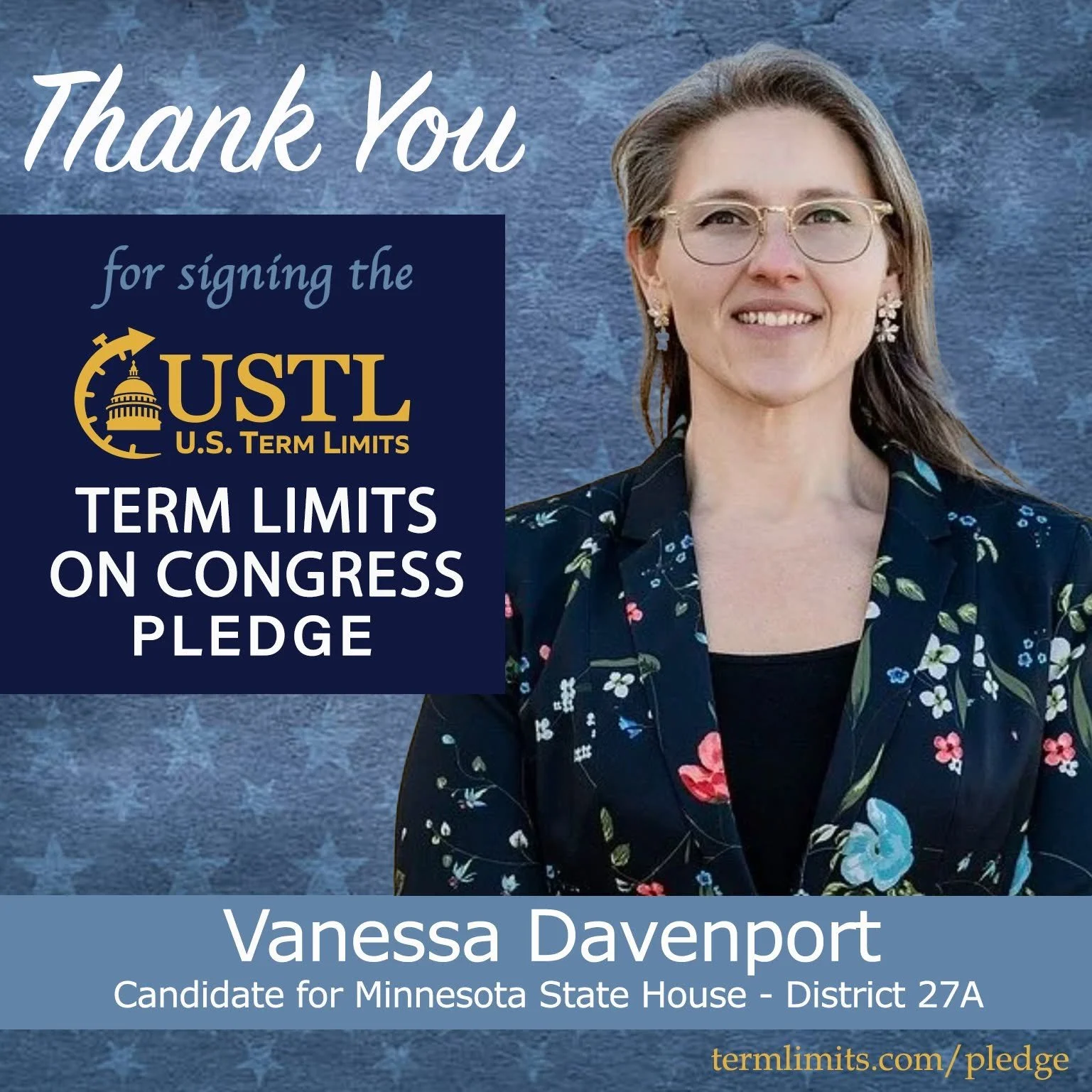
#2: AI Datacenter - Protecting Our Communities While Planning for the Future

Growth is coming but local families shouldn’t be left paying the bill.

  • Require corporations to cover infrastructure, grid, and water costs

  • No blank checks for large corporations

  • Independent third-party audits at every phase

  • Full public transparency before approvals

  • Local communities must have a real voice

  • Open to pausing expansion until safeguards are in place

  • Opponents Approach:

    • HF28 - As chief author of HF28, Shane Mekeland advanced legislation that reduces regulatory oversight to accelerate data center energy infrastructure, while my approach prioritizes requiring corporations to cover costs, ensuring transparency, and protecting local communities before expansion.

    • HF4153 - As chief author of HF4153, Shane Mekeland supported policies that ease water usage approvals and provide tax advantages for data centers, whereas I advocate for full public transparency, independent oversight, and ensuring corporations, not local families, bear the long-term costs.

    • HF4990 - As an author/coauthor of HF4990, Shane Mekeland backed expanded exemptions and incentives for data centers to encourage rapid development, in contrast to my position that growth should be paused or limited until strong safeguards, accountability, and community protections are in place.

#3: Reliable Energy & Grid Security

Reliable power isn’t optional and neither is protecting ratepayers.

  • Keep energy reliable and affordable

  • Support reviewing/lifting the nuclear moratorium

  • ONLY with:

    • Ratepayer protections

    • Transparent financing

    • Public oversight

  • Focus on grid resilience + affordability

  • Long term planning

  • Opponents Approach: Short-term, deregulation-first approach that risks long-term costs and instability.

More

Priorities

Let’s Build This Together!

Campaigns in small communities are about relationships. I want to hear what matters to you and your family.

Whether you want to volunteer, host a conversation, or simply stay informed — I’d love to connect!

Accepting Mail:

PO Box 102

Big Lake, MN 55309

About Vanessa

I’m running for the Minnesota House of Representatives in District 27A because I believe in hard work, accountability, and making sure working families aren’t left behind. After years of serving in different roles, I want to continue serving my community in a more meaningful and impactful way.

I was raised by a single mother in Tennessee, and from an early age, I learned the value of responsibility and resilience. I worked three jobs while in high school, which shaped my work ethic and my understanding of what it takes to get ahead.

I went on to study Aviation and International Studies at Jacksonville University and completed FAA Air Traffic Control training, gaining experience in high-pressure, high-accountability environments.

My career has been grounded in logistics, operations, and public service. I’ve worked as a QA Auditor for Endeavor Airlines and as a Materials Manager and Heavy Equipment Operator in industrial construction across multiple states. I also served on active duty in the United States Navy as a Logistics Specialist aboard the USS Nimitz during its longest deployment since Vietnam, including during the COVID-19 pandemic, and I continued to serve in the Navy Reserves.

Today, I work as an analyst at a Minnesota electric company while completing my Master’s degree in Engineering, focused on supply chain transportation and logistics.

Having lived in nine states and visited more than 30 countries, I bring a broad perspective and a deep commitment to community. I’m running to protect our communities from unchecked expansion of AI data centers, safeguard and strengthen our electric grid, strengthen accountability in government, and ensure that our economy works for everyone, not just the few.

Current endorsements:

  • DFL

  • DFL Rural Caucus

  • Minnesota Young DFL

  • FairVote Minnesota

  • Planned Parenthood

  • Save the Boundary Waters Action Fund

  • Women Winning

The Patriot Newspaper Articles

‍ ‍

If a Project Is Good for Our Community, It Should Be Able to Prove It

‍ AI is here to stay, and data centers will play a major role in that future.

‍ I am not opposed to data centers.

‍I am opposed to approving billion-dollar projects before the public receives complete information.

‍Data centers are often promoted as engines of economic growth that bring jobs, tax revenue, and investment. Those benefits deserve consideration. But so do the risks, costs, and unanswered questions.

PRIVACY: We are assured that data centers are not surveillance systems, but they provide the computing power behind facial recognition, behavioral tracking, predictive analytics, mass data analysis, and increasingly powerful AI tools. As these technologies expand, communities have every right to ask what safeguards exist to protect privacy, civil liberties, and personal data.

WHO PAYS? Minnesota already provides qualified data centers with a 35-year sales tax exemption on servers, cooling systems, power infrastructure, networking equipment, and software. Rep. Shane Mekeland's HF4990 would further expand exemptions and reduce certain oversight requirements. Additional incentives may also be available through Tax Increment Financing (TIF), property tax abatements, infrastructure assistance, utility upgrades, and other public subsidies (handouts for the rich).

‍Data centers also require substations, transmission lines, roads, utility upgrades, and water infrastructure. Sometimes developers pay. Sometimes taxpayers and ratepayers do.

‍Before approvals are granted, citizens deserve to know what incentives are being offered, what taxes will actually be paid, and who actually bears the risk.

JOBS: Construction jobs are real and important, but they are temporary. Modern AI data centers are highly automated and often employ only dozens or a few hundred permanent workers some of which may be remote. Before offering incentives, communities deserve clear information about long-term jobs, local hiring commitments, and who ultimately benefits.

SCALE: Kevin O'Leary's proposed Stratos Project in Utah could consume more than twice the electricity currently sold across the entire state of Utah each year. The project covers roughly 1,700 acres, making it one of the largest proposed AI data center developments in the world. How will this project be energized? Short answer, they don’t know yet. Plans have shifted many times. Questions also remain about long-term water use, land impacts, environmental effects, and who bears the risk if projections don't match reality. These are too many crucial unknowns for any community, and they are the ones at risk.

SECRECY: Across the country, many data center negotiations occur behind NDAs’ and confidential development discussions. If these projects are truly beneficial, why are communities so often asked to make decisions before all the facts are available?

‍What we're asking for is simple: complete information before decisions are made that could affect our water, our grid, our tax base, our privacy, and our quality of life for decades.

‍If a project is truly beneficial, it should be able to prove it.

‍But don't take my word for it. Do your own research. Don't rely on politicians. Don't rely on activists. Don't rely on corporations. Don't even rely on me.

‍Read the studies. Read the legislation. Ask questions. Follow the money!!

‍History is full of examples where products and technologies were embraced long before the public understood the consequences. Asbestos, lead in gasoline, and PFAS all taught us the same lesson: ask hard questions before the damage is done.

‍I'm not saying AI data centers are the same thing. I'm saying that once billions are invested, infrastructure is built, and resources are committed, it becomes much harder to change course.

‍Corporations have a responsibility to their investors. We have all seen that a lot of politicians are in the pockets of corporations. We have a responsibility to our families, our communities, our water, and our environment.

‍Is the juice really worth the squeeze?

Until we have complete information, independently verified data, and meaningful protections for our communities and environment, I believe caution is not obstruction. It's responsible leadership.

‍Prepared by the Davenport for Minnesota House District 27A. Learn more at https://www.davenportmn27a.house/ or attend one of my many events. Next event is Meet the SD27 Candidates 6/12 5:30 PM at Vittas Mexican Bar & Grill

‍Sources:

U.S. Department of Energy – Data center electricity demand growth.

‍U.S. Energy Information Administration – Utah electricity consumption.

‍Minnesota Department of Revenue – Qualified Data Center Tax Exemption.

‍HF4990 bill text.

‍Utah Clean Energy analysis regarding Stratos power and water concerns.

‍Minnesota large-scale data center law (2025) regarding water review and utility oversight‍ ‍

Our District

Explore MN House District 27A

Haven ~ Palmer ~ Santiago ~ Clear Lake ~ Becker ~ Orrock ~ Big Lake